
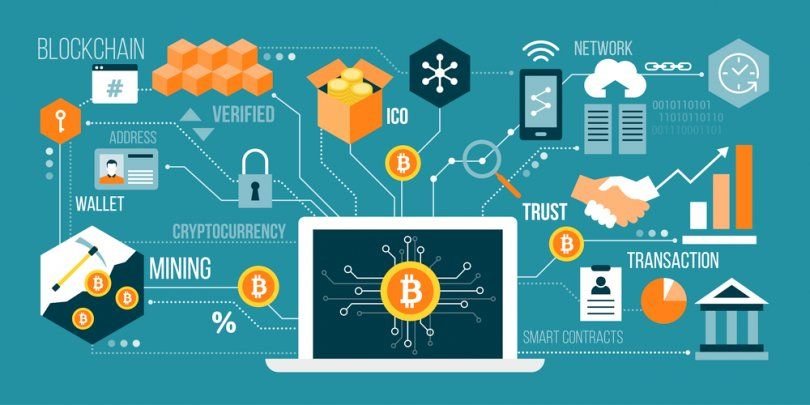
Blockchain technology is one of the most revolutionary innovations of the 21st century. From powering cryptocurrencies like Bitcoin and Ethereum to transforming sectors like finance, supply chain, healthcare, and real estate, So blockchain is reshaping how the world stores, verifies, and exchanges information. In simple terms, blockchain is a digital system that maintains secure, transparent, and tamper-proof records. But how does it actually work? Why is blockchain considered more secure than traditional systems? And what real-world problems does it solve?
In this detailed word guide, I will explore everything about blockchain technology in simple language with real examples, making it perfect for beginners, students, professionals, and crypto enthusiasts.
What is Blockchain Technology? (Simple Definition)
Blockchain is a decentralized digital ledger that records transactions across many computers in a way that the records cannot be altered, deleted, or hacked.
You should think of blockchain as a chain of “blocks.”
Each block contains information, and every time new information is added, a new block is created and linked to the previous one. This creates a chain — hence the name block-chain.
✔ Key points in simple words:
- A blockchain is not stored in one place but across thousands of computers.
- It is transparent — everyone on the network can verify transactions.
- Once data is added, it becomes a permanent and tamper-proof.
- Blockchain works without banks, governments, or intermediaries.
This makes blockchain one of the most trusted systems for recording financial transactions and other types of data.
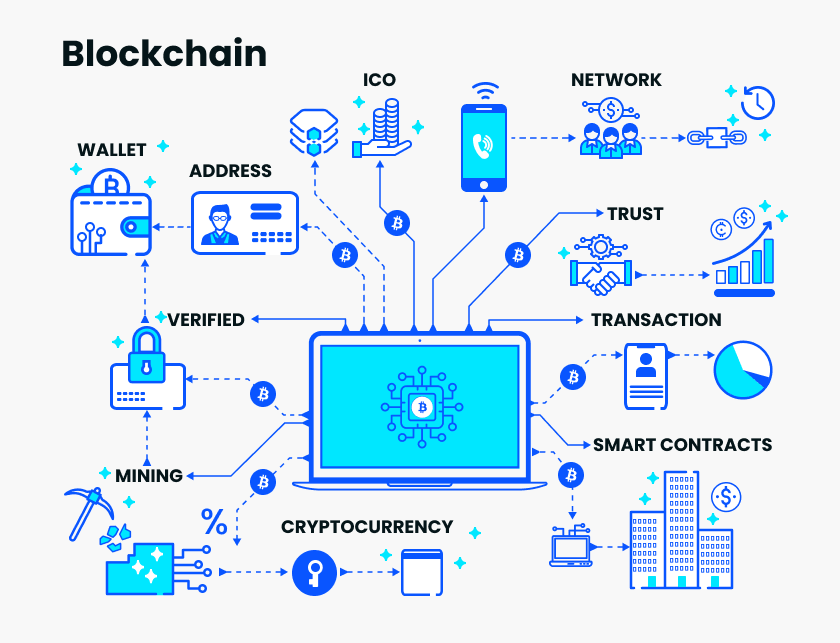
How Does Blockchain Work? (Step-by-Step Explanation)
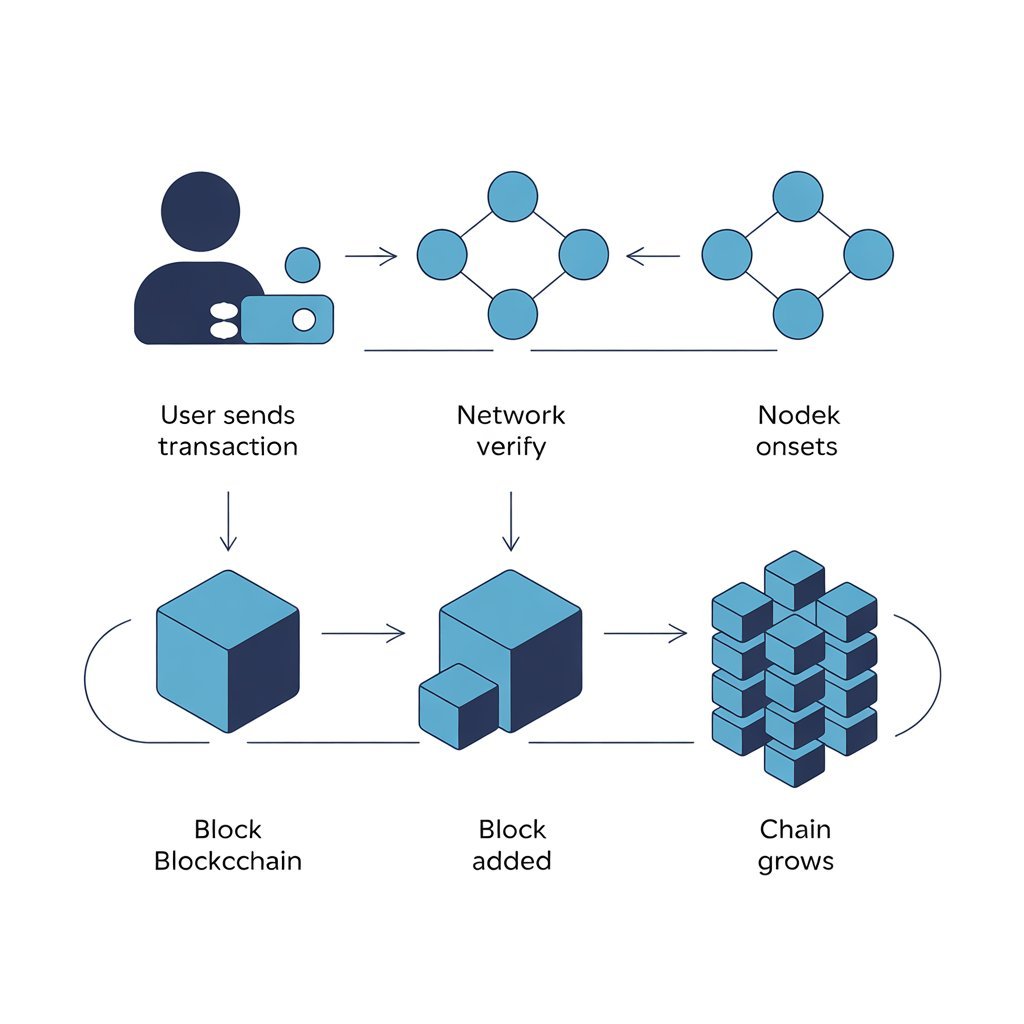
To understand blockchain better, imagine someone sending Bitcoin to another person.
1. A Transaction is Created
A user initiates a transaction, for example:
Ram sends 0.5 Bitcoin to Sita.
2. Transaction is Broadcast to the Network
The transaction goes to a network of computers called nodes.
3. Nodes Verify the Transaction
Nodes use mathematical algorithms to confirm:
- Ram has enough balance
- The transaction is valid
- No double spending (sending the same Bitcoin twice)
4. Verified Transaction is Added to a Block
Once verified, the transaction is grouped with others and added to a block.
5. Block is Sealed and Added to the Blockchain
After verification, the block is linked to the previous block.
6. Blockchain is Updated Across All Computers
Every node on the network gets a copy of the updated blockchain.
This entire process ensures security, transparency, and trust without middlemen.
Features of Blockchain Technology
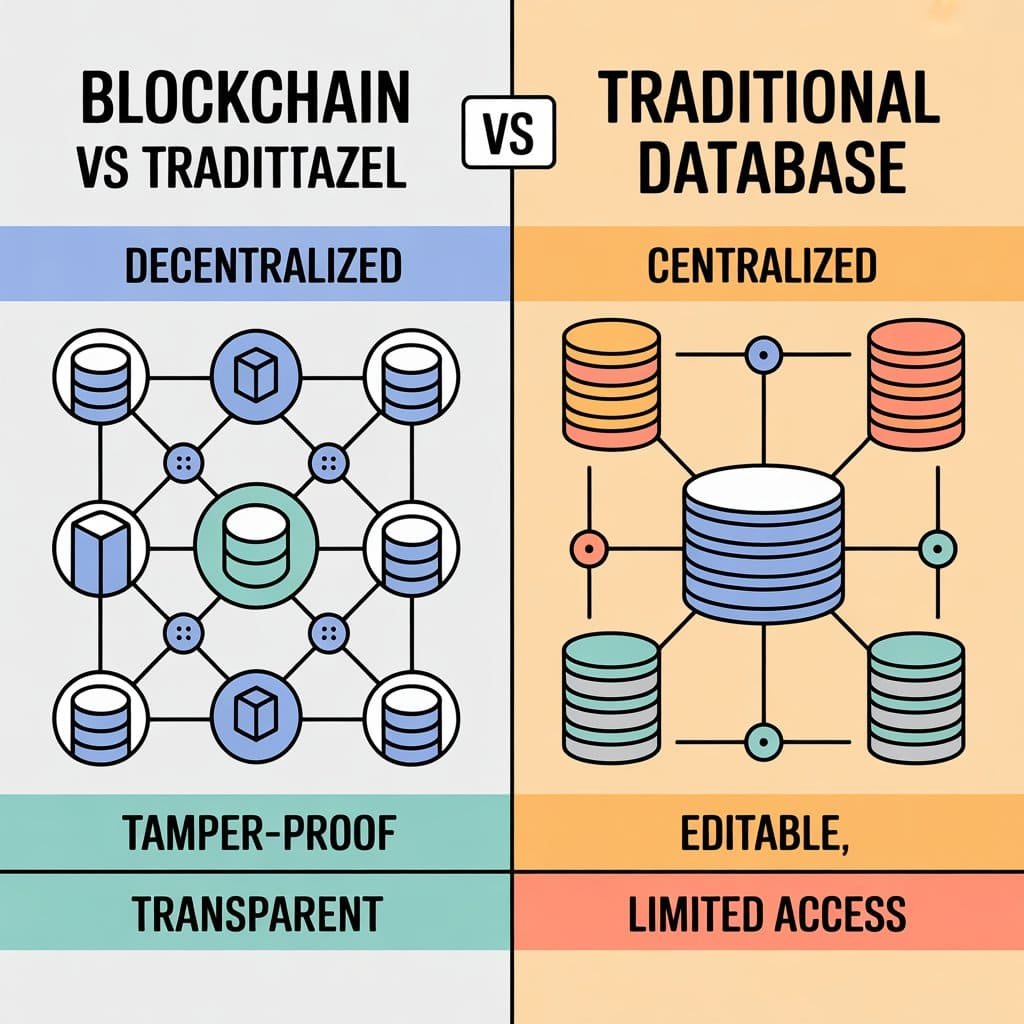
Blockchain offers several unique features that make it different from traditional databases.
1. Decentralization
Unlike banks or centralized servers, blockchain does not rely on one authority.
Instead, it is maintained by thousands of computers globally.
2. Transparency
Anyone on the network can view transactions. Nothing is hidden.
3. Immutability
Once recorded, data on the blockchain cannot be changed or deleted.
4. Security
Each block is protected with cryptography and linked to others, making hacking nearly impossible.
5. Faster Transactions
Blockchain eliminates middlemen, making transactions faster — especially international payments.
6. Reduced Costs
No intermediaries = lower transaction fees.

Types of Blockchain
There are three major types of blockchain networks:
1. Public Blockchain
Open to everyone.
Example: Bitcoin, Ethereum.
2. Private Blockchain
Access is restricted to authorized users only.
Example: hyperledger-based systems used by companies.
3. Consortium Blockchain
Controlled by a group of organizations.
Example: multiple banks sharing one blockchain system.

Blockchain vs Traditional Databases
| Feature | Blockchain | Traditional Database |
|---|---|---|
| Control | Decentralized | Centralized |
| Data Editing | Not possible | Can be altered |
| Transparency | High | Low |
| Security | Very high | Moderate |
| Speed | Medium | High |
| Trust Needed | None | High |
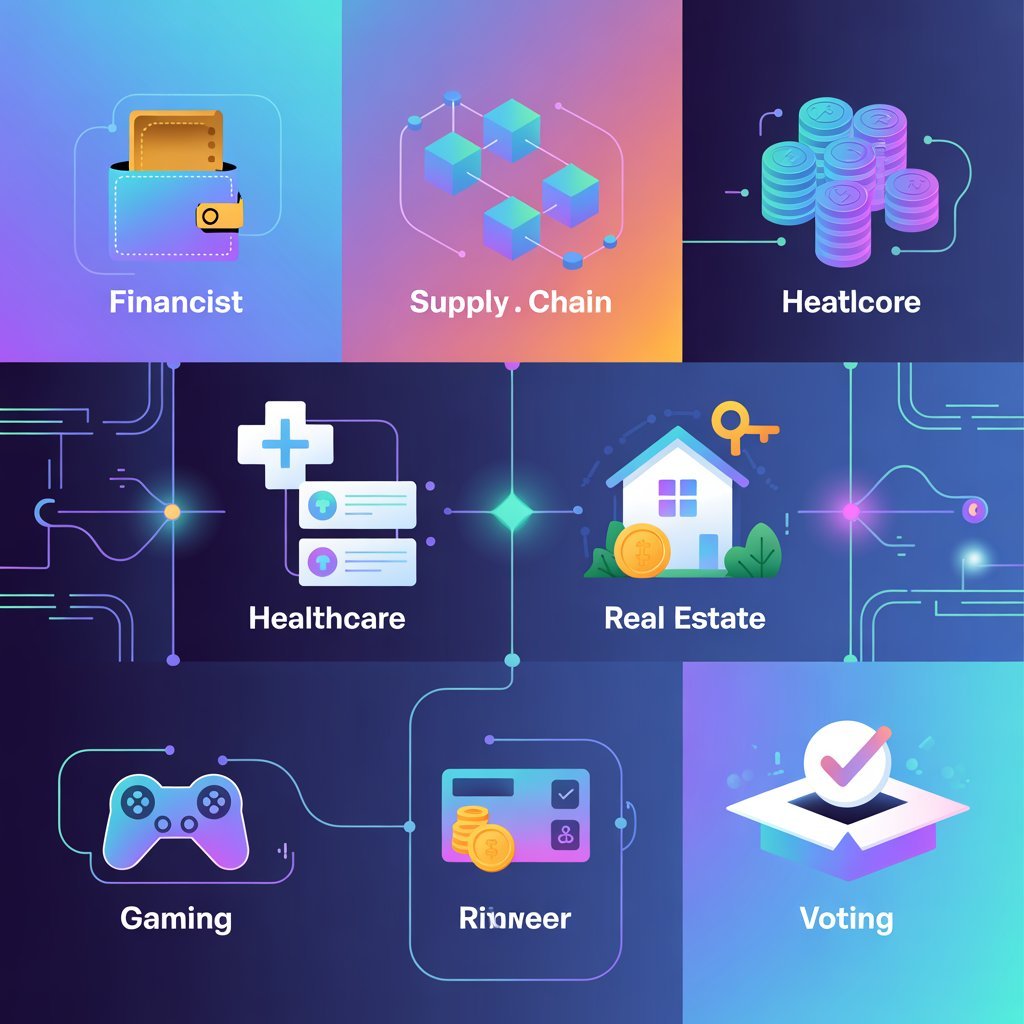
Real-World Use Cases of Blockchain Technology
Blockchain is not limited to Cryptocurrency. It is transforming many industries.
1. Finance and Banking
Blockchain reduces transaction costs and eliminates intermediaries like SWIFT or banks.
Examples:
- International payments via Ripple (XRP)
- Smart contracts on Ethereum
- Banking KYC on blockchain
Banks like JP Morgan, SBI, ICICI, HSBC are already using blockchain solutions.
2. Cryptocurrency and Digital Payments
Blockchain is the backbone of cryptocurrencies.
It enables:
- Peer-to-peer digital payments
- Secure storage of digital assets
- Tokenization of real-world assets
Bitcoin, Ethereum, Solana, and other coins rely on blockchain.
3. Supply Chain Management
Companies use blockchain to track products from the factory to the customer.
Benefits:
- Transparency
- No fake products
- Real-time tracking
- Reduced corruption and fraud
Industries like pharmaceuticals, food, and electronics are adopting blockchain.
4. Healthcare
Blockchain stores patient records securely.
Benefits:
- No data tampering
- Easy access for doctors
- Better privacy
- Unified patient history
Example: Blockchain-based medical records system in the UAE.
5. Real Estate
Blockchain simplifies property transactions.
Benefits:
- Smart contracts reduce paperwork
- No fraud
- Instant ownership verification
- Tamper-proof property records
Countries like Georgia and Sweden use blockchain for land registry.
6. Voting Systems
Blockchain can eliminate election fraud.
Benefits:
- Transparent voting
- No duplicate votes
- Instant results
- Increased voter trust
Estonia is one of the first countries trying blockchain-based voting.
7. Digital Identity Management
Blockchain can store identity data securely.
Uses:
- KYC
- Passports
- Driving licenses
- Digital signatures
Microsoft and IBM are building decentralized identity systems.
8. Gaming and Metaverse
NFTs (Non-Fungible Tokens) are powered by blockchain.
Gamers can own:
- Skins
- Weapons
- Avatars
- Virtual land
Games like Axie Infinity use blockchain for rewards and ownership.
Benefits of Blockchain Technology
✔ 1. Higher Security
Data is encrypted and linked to previous blocks.
✔ 2. Eliminates Middlemen
Reduces fees and speeds up processes.
✔ 3. Transparency & Trust
Anyone can verify transactions.
✔ 4. Traceability
Perfect for supply chains and auditing.
✔ 5. Automation via Smart Contracts
Smart contracts automatically execute actions when conditions are met.
Challenges of Blockchain Technology
Despite its benefits, blockchain has some challenges:
1. Scalability Issues
Handling thousands of transactions per second is difficult.
2. High Energy Consumption
Networks like Bitcoin require heavy computing power.
3. Regulatory Uncertainty
Many countries are still creating laws for blockchain and crypto.
4. Technical Complexity
It requires skilled developers and infrastructure.
Future of Blockchain Technology
Blockchain will play a crucial role in the future digital economy.
Upcoming trends:
- Central Bank Digital Currencies (CBDCs)
- Tokenization of land, gold, and assets
- Metaverse and virtual real estate
- Blockchain-based identity cards
- AI + Blockchain for secure automation
Experts predict blockchain will become as common as the internet in the coming decade.

Conclusion
Blockchain technology is much more than cryptocurrency. It is a complete system for secure, transparent, and decentralized data management. From banking to healthcare, real estate, voting, and Supply chain — Blockchain is transforming industries globally.
As blockchain continues to evolve, it will create new opportunities for businesses, governments, and individuals. Learning and understanding blockchain today will help you stay ahead in the future digital world.