
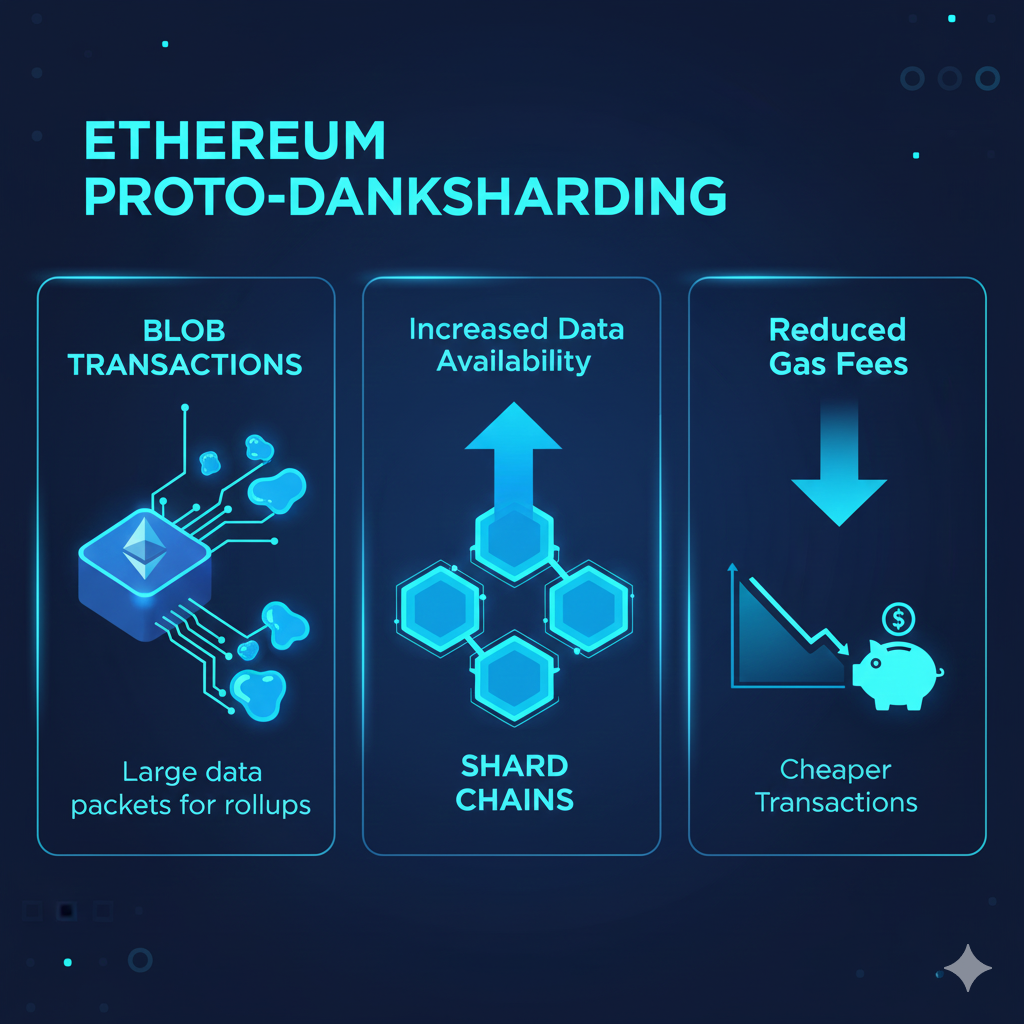
ETH has always been the backbone of decentralized applications, DeFi, NFTs, and smart contracts. But as the network grew, so did congestion, high gas fees, and slow transaction processing.
The Dencun Upgrade, activated in 2024, marked one of ETH biggest transformations — bringing Proto-Danksharding, blob transactions, and a major performance overhaul designed to make Ethereum a truly scalable global settlement layer.
What does Ethereum look like AFTER the Dencun upgrade? And where is ETH headed in 2026?
This detailed guide breaks down the technical improvements, ecosystem impact, real use cases, market forecast, and future roadmap that shape ETH future.
1. What is the Dencun Upgrade? (Quick & Simple Explanation)
Dencun is a combined upgrade of:
- Deneb (Consensus Layer update)
- Cancun (Execution Layer update)
Together, the upgrade focuses on making ETH cheaper, faster, and more scalable — especially for Layer-2 networks.
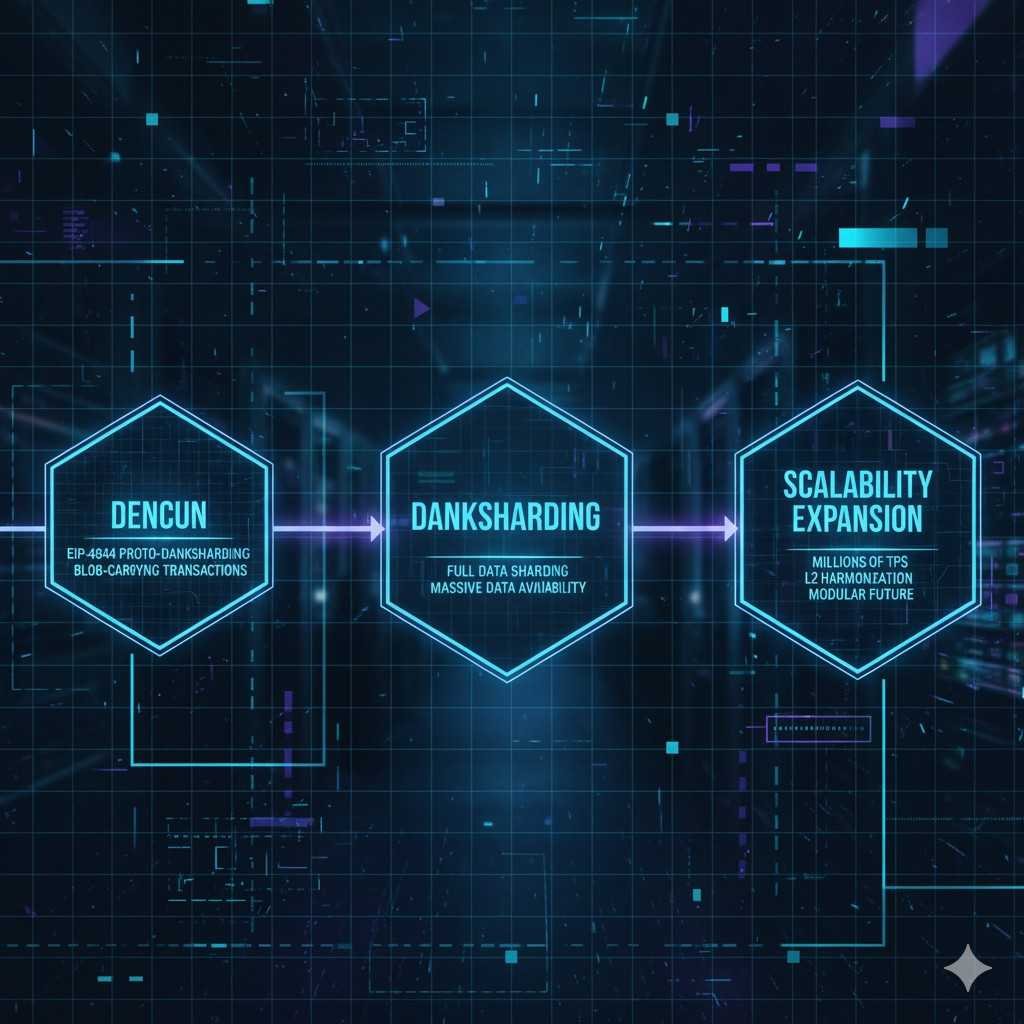
Key Feature: Proto-Danksharding (EIP-4844)
This introduces blob transactions, which allow Layer-2 (rollups) to store data more cheaply.
Why this matters:
- Rollup fees drop massively
- Users pay 10x–50x lower gas fees on L2s
- ETH becomes more scalable without compromising security
Dencun is the foundation for full Danksharding, which will eventually help Eth process 100,000+ TPS.

2. How the Dencun Upgrade Changed Ethereum Immediately
2.1. Massive Reduction in L2 Gas Fees
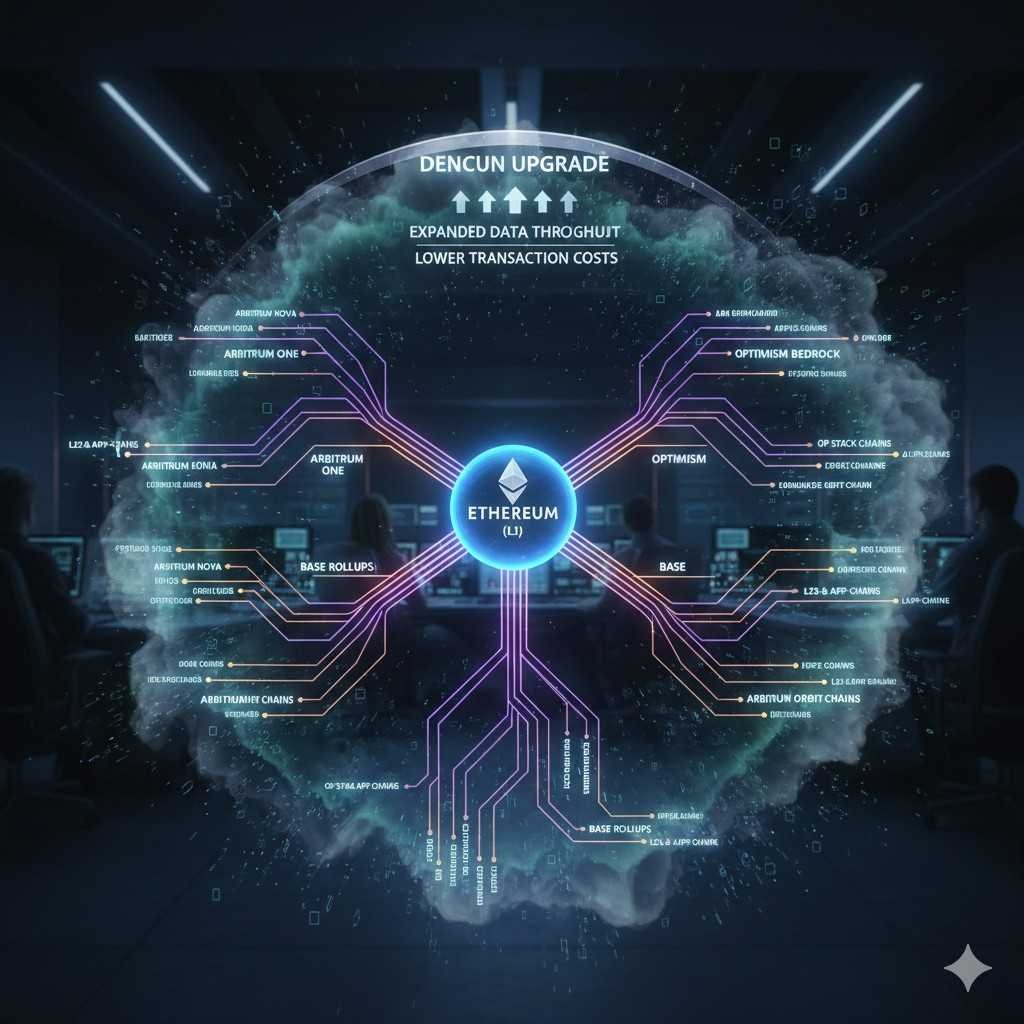
One of the biggest impacts was the cost reduction on networks like:
- Arbitrum
- Optimism
- Base
- zkSync
- Starknet
- Scroll
Before Dencun:
L2 fees were usually ₹30–₹200 ($0.30–$2) approximately.
After Dencun:
Fees dropped to as low as ₹0.50–₹5 ($0.005–$0.05) for simple transfers.
This encourages new users, builders, and developers to choose Ethereum-based L2 ecosystems.
2.2. Boost in Transaction Speed & Network Efficiency
Blob data storage allows rollups to batch more transactions, increasing throughput without overwhelming the main chain.
Results:
- Faster confirmations
- Higher transaction capacity
- Less mainnet congestion
- Lower gas competition
2.3. Cheaper dApp Usage = More Adoption
DApps that require frequent interactions (DEXs, NFTs, gaming apps, Web3 social apps) become more affordable.
This opens the doors for:
✔ Play-to-earn games
✔ On-chain social media
✔ Microtransactions
✔ Retail DeFi users
3. ETH Position After Dencun — Stronger Than Ever
ETH dominance grows because of three main reasons:
✓ Layer-2 Explosion
Base, Optimism, Arbitrum, zkSync and more are onboarding millions of users monthly.
✓ Enterprise-Level Adoption
Lower fees = big companies exploring Ethereum for tokenization and RWAs.
✓ Safer, Sustainable Network
Proof of Stake + scaling upgrades make ETH more environmentally friendly and efficient.
4. The Future of Ethereum After Dencun — What to Expect by 2026
Let’s explore the biggest changes we will see over the next 2–3 years.
4.1. Ethereum Will Become a “Global Settlement Layer”
Just like SWIFT settles global payments, Ethereum aims to settle global on-chain value — including:
- Digital assets
- Tokenized stocks
- Bonds
- Real estate
- Stablecoins
- Supply chain records
Dencun makes settlement cheaper and faster, which is critical for real-world adoption.
4.2. Layer-2 Networks Will Become the “User Layer”
By 2026, most users won’t interact directly with Ethereum mainnet.
Instead, they’ll use L2s like:
- Base for consumer apps
- Arbitrum for DeFi
- Starknet for gaming
- zkSync for private transactions
Mainnet = Settlement
Layer-2 = Execution
ETH becomes the secure base layer, while L2s become the user-friendly interface.
4.3. Full Danksharding Coming by 2026–2027
Dencun introduced proto-danksharding, but the full version will bring:
- 100,000+ transactions per second
- Extremely low fees
- Global-scale blockchain infrastructure
This will make Ethereum the most scalable L1 on earth.
4.4. ETH Staking Yields Will Improve
More usage = more fees burned.
That means:
ETH supply continues to stay deflationary
With higher L2 activity:
- Blob fees → burned
- ETH supply → decreases
This supports long-term price growth.
4.5. Growth of Ethereum’s RWA Ecosystem
Real World Assets (RWAs) are one of the biggest incoming revolutions.
Examples include:
- Tokenized real estate
- Tokenized gold, bonds
- Carbon credits
- Private equity shares
BlackRock, JPMorgan, and major banks are already testing ETH-based solutions.
Dencun accelerates this adoption.
5. Sectors That Will Explode on Ethereum After Dencun
5.1. DeFi 2.0
Lower fees enable a new generation of lending protocols, DEXs, and yield platforms that can serve millions of users.
5.2. Web3 Social Media
Decentralized platforms become realistic because microtransactions become cheap.
5.3. Gaming & Metaverse
Low-cost transactions allow on-chain assets, skins, and NFTs inside games without heavy costs.
5.4. Stablecoins and Payments
With lower fees, stablecoin transfers compete with traditional digital payments.
5.5. AI + Ethereum
AI agents performing on-chain tasks will rely heavily on Layer-2 affordability.
6. ETH Price Prediction After Dencun (2025–2026)
2025 Estimate:
$4,000 – $6,000 depending on market conditions.
2026 Estimate:
$6,500 – $9,500 if:
- L2 activity continues scaling
- Fee burn remains deflationary
- Global adoption rises
Long-term, Ethereum remains one of the strongest crypto ecosystems with real usage and innovation.
7. Risks & Challenges ETH Still Faces
Even after Dencun, Ethereum must tackle:
- L2 fragmentation
- MEV issues
- Competition from Solana, TON, and Aptos
- Delays in future roadmap
- Onboarding non-technical users
But ETH developer ecosystem remains the largest in the blockchain world — giving it a major advantage.
8. Final Thoughts — The Future Is Layer-2 Powered ETH
Dencun is not the final upgrade.
But it is the gateway to an ultra-scalable Ethereum.
By 2026, ETH will likely be:
✔ Cheaper
✔ Faster
✔ More decentralized
✔ More adopted globally
✔ Home to millions of Web3 users
It positions ETH as the digital economic infrastructure of the future.
FAQs — ETH After Dencun Upgrade
1. What is the Dencun Upgrade?
A major ETH upgrade combining Cancun + Deneb to enable cheaper and faster transactions.
2. What is proto-danksharding?
A new data storage model using blob transactions, reducing L2 costs by up to 90%.
3. Will Ethereum fees go down after Dencun?
Yes — especially on Layer-2 networks like Base, Arbitrum, Optimism.
4. Is ETH deflationary after Dencun?
More activity = more ETH burned, making supply trend deflationary.
5. Will ETH price grow after Dencun?
Long-term outlook is bullish due to demand, staking, and reduced supply.