

🧭 Introduction
What is Cryptocurrency – Cryptocurrency has become one of the hottest topics in today’s digital world. Whether you use the internet for trading, investing, gaming, or payments—crypto is everywhere. But if you’re a beginner, the concept of digital money, blockchain, mining, and wallets can feel confusing.
This detailed guide explains cryptocurrency in the simplest, most human-friendly way possible. You will learn what crypto is, how it works, why it is so popular in 2026, and how you can start investing safely.
🌐 What Is Cryptocurrency?
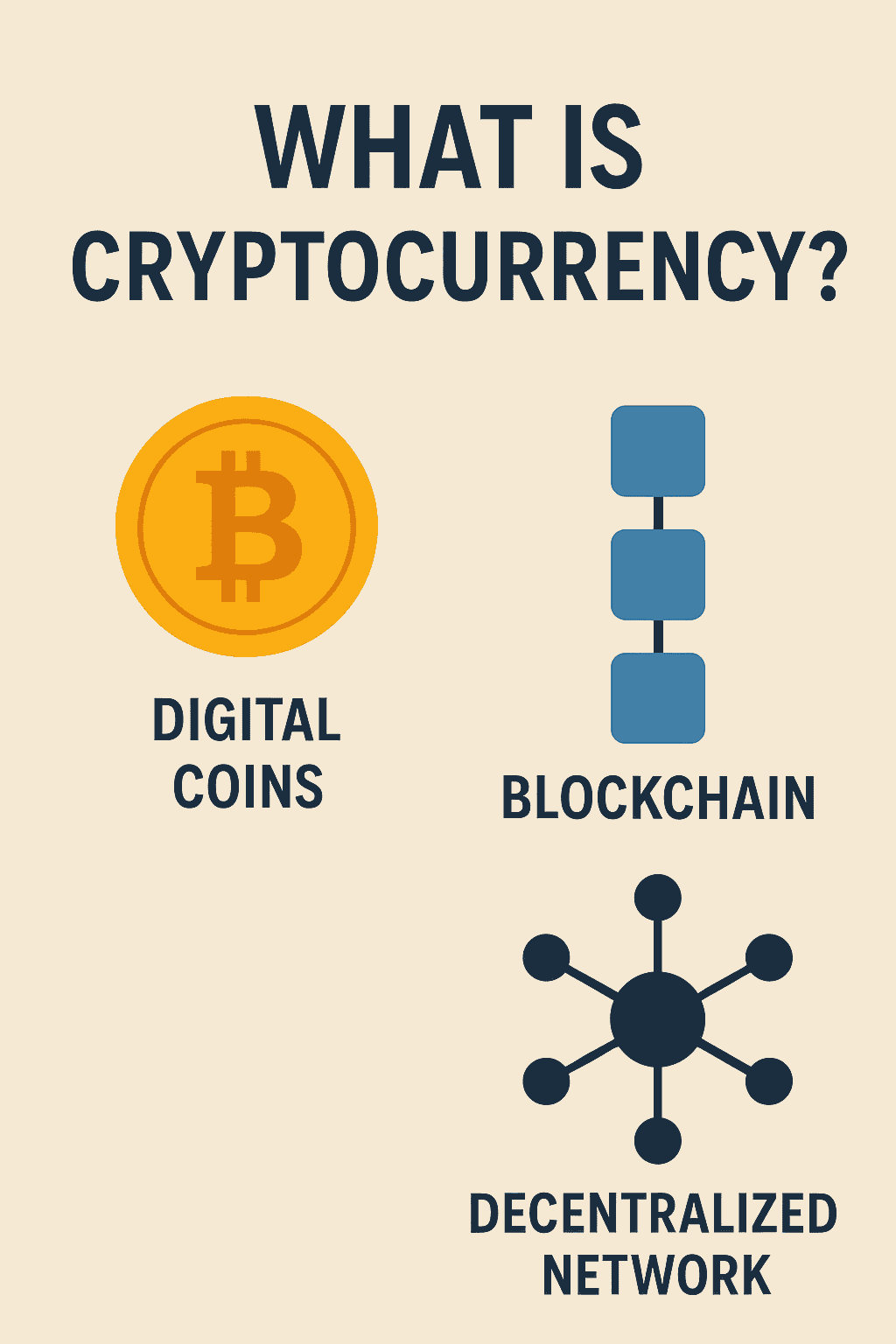
Cryptocurrency is a digital currency that exists only online and uses Blockchain Technology for security. Unlike traditional money (rupees, dollars), crypto is decentralized—No bank, Government, or company control it.
Simple Meaning:
“Cryptocurrency is digital money that works on a secure, decentralized computer network instead of banks.”
This means:
- No central authority control it.
- Transactions happen quickly.
- Everything is transparent.
- Data cannot be changed or hacked easily.
🔗 How Does Cryptocurrency Work?
Cryptocurrency works on blockchain, which acts like a digital public ledger. Every transaction is recorded permanently and verified by thousands of computers.
🔍 1. Blockchain Technology
Blockchain is a revolutionary technology that functions as a shared, immutable digital ledger. The name “blockchain” comes from its structure data is organized in blocks, with each new block linked to the one before it, forming a continuous chain.
Each block contains crucial data, such as a list of transactions, a timestamp, and a unique identifier called a cryptographic hash. This hash is generated from the block’s contents and the hash of the previous block, ensuring that each block is tightly connected to the one before it.
Blockchain is a chain of data “blocks.”
Each block contains:
- Transaction details
- A unique encrypted code
- The code of the previous block
- Blockchain’s linked structure makes data tampering detectable by altering hashes and breaking the chain.
- It acts as a distributed database, storing transactions across the network.
- Each transaction is verified by the majority, ensuring legitimacy.
- This decentralization prevents any single party from manipulating the data.
Because each block is linked, it is nearly impossible to hack or alter the data.

🔍 2. Mining: How New Coins Are Created
Cryptocurrencies like Bitcoin are created through mining, where high-power computers solve complex mathematical equations.
Mining is the process that Bitcon and several other cryptocurrencies use to generate new coins and verify new transactions. It involves vast, decentralized networks of computers around the world that verify and secure blockchains – the virtual ledgers that document cryptocurrency transactions. In return for contributing their processing power, computers on the network are rewarded with new coins. It’s a virtuous circle: the miners maintain and secure the blockchain, the blockchain awards the coins, the coins provide an incentive for the miners to maintain the blockchain.
Miners:
- Verify transactions
- Add new blocks
- Receive new Bitcoin as reward
Mining keeps the network secure and decentralized.
🔍 3. Digital Wallets
A digital wallet, also known as an electronic wallet, is a software application that stores your payment details and passwords, enabling seamless transactions on connected devices, chiefly mobile phones. By securely holding your financial data, digital wallet remove the necessity for physical wallets. You simply load your credit, debit, or bank account information into the application, allowing you to conduct purchases directly via your device without the need to carry physical cards.
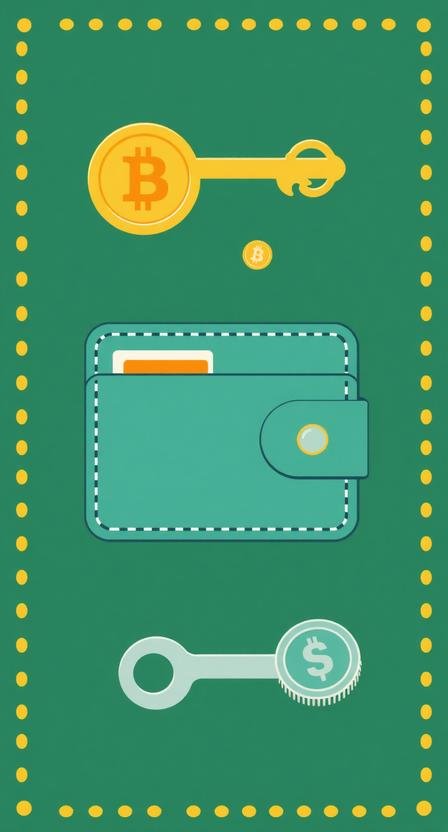
To store cryptocurrencies, you need a Crypto wallet.
Types of wallets:
Hot Wallets (Online):
- Exchanges & apps
- Easy to use but less secure
Cold Wallets (Offline):
- Hardware devices
- Very safe for long-term storage
💹 Types of Cryptocurrencies
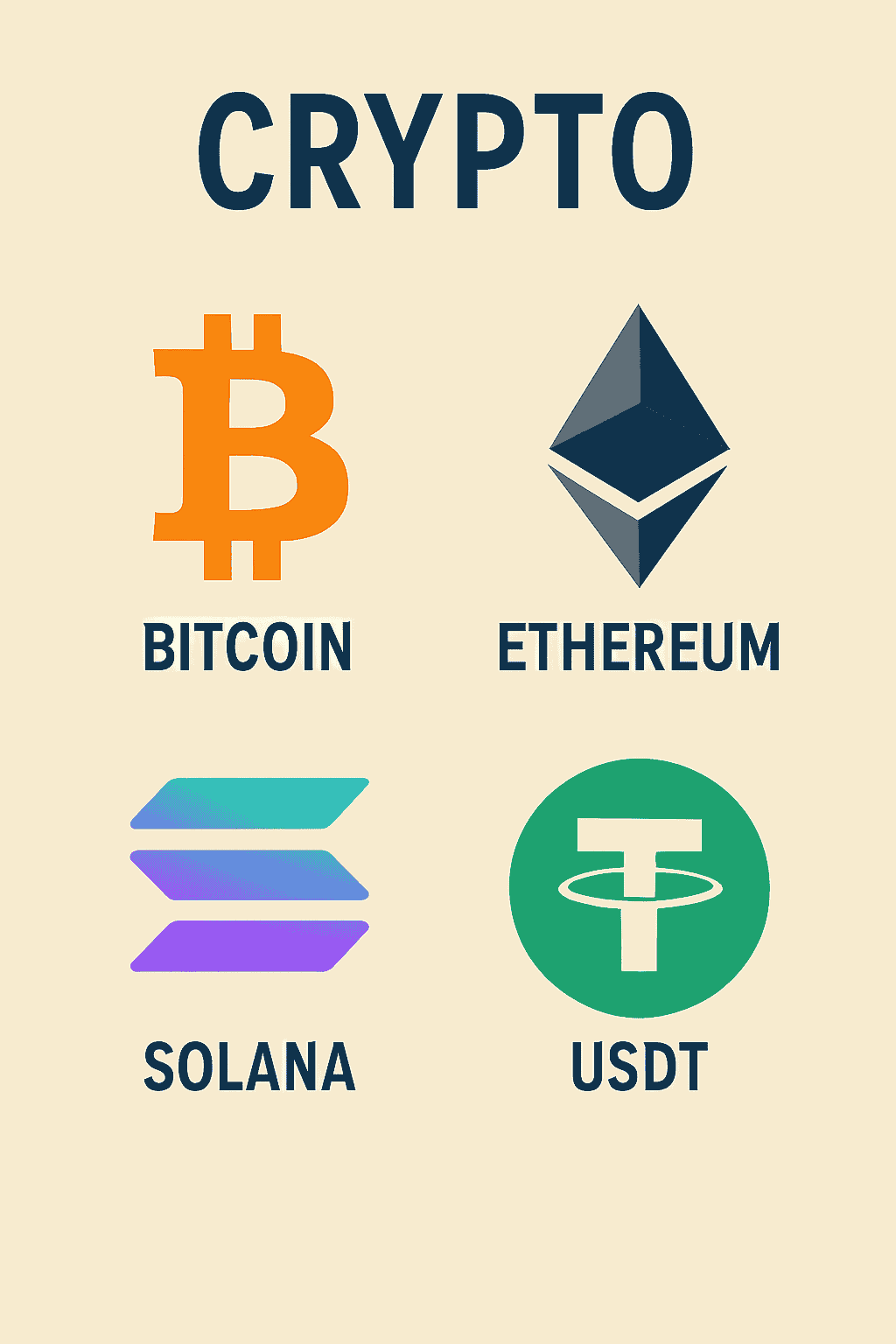
By 2026, over 20,000 cryptocurrencies exist, but these are the major ones:
1️⃣ Bitcoin (BTC)
- First cryptocurrency
- Most trusted
- Also called “Digital Gold”
2️⃣ Ethereum (ETH)
- It is used for smart contracts
- Backbone of NFTs, DeFi, Web3 Application
3️⃣ Popular Altcoins
- Solana (SOL)
- Cardano (ADA)
- XRP
- Litecoin (LTC)
4️⃣ Stablecoins
Stablecoins are backed by real-world assets.
Examples:
- USDT
- USDC
They maintain stable value and are less volatile.
📈 Why Cryptocurrency Is So Popular in Future?
✔ Fast & Global
Send money anywhere within seconds.
✔ High Profit Potential
Crypto has shown massive returns in the last decade.
✔ Decentralized
No government or bank can control your funds.
✔ Innovation
Blockchain enables Web3, DeFi, NFTs, Metaverse and highly secure digital applications.
⚠ Risks of Cryptocurrency (You Must Know Before Investing)
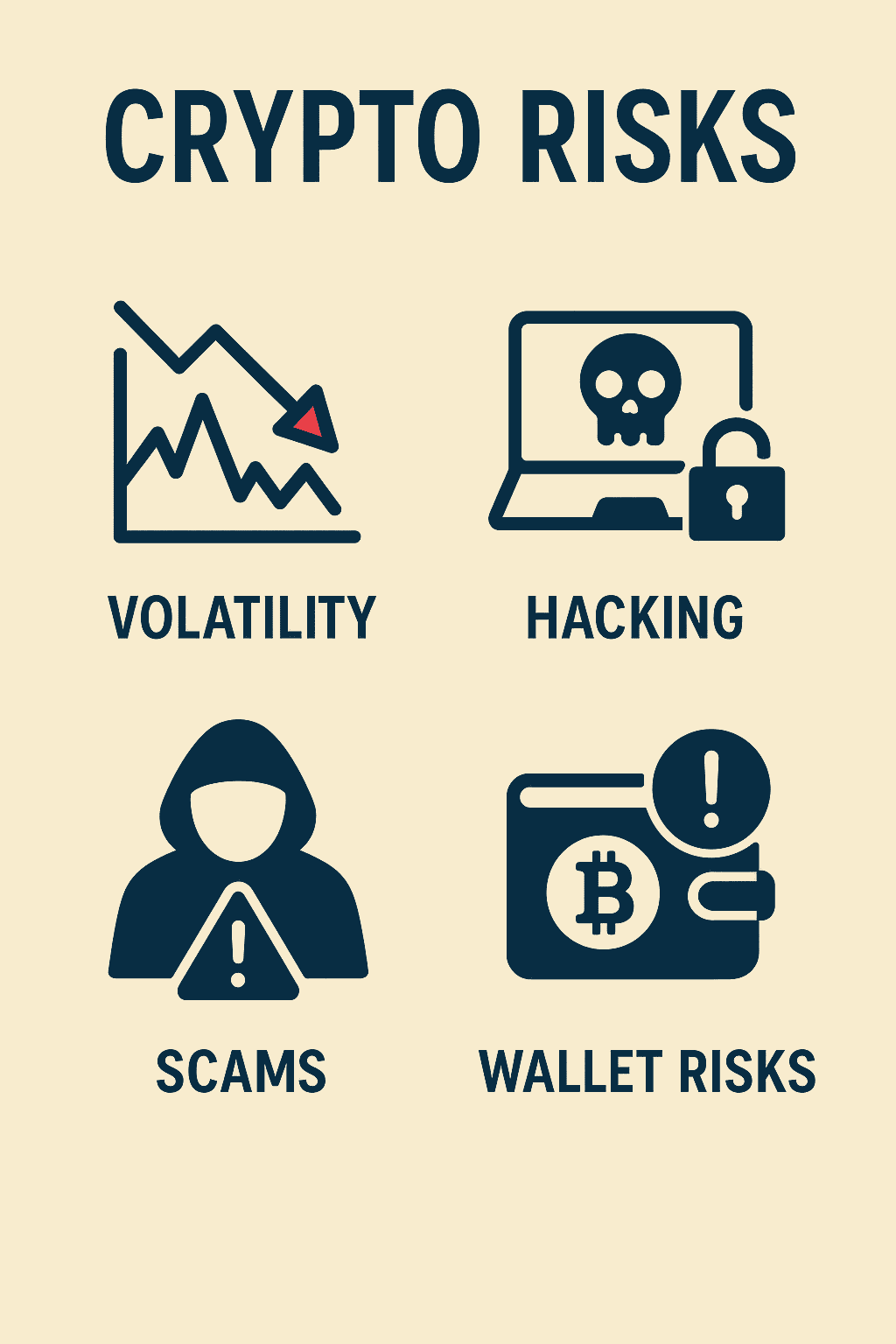
Crypto is powerful, but risky too. Every beginner should know this:
❌ 1. High Volatility
Prices can rise or fall rapidly within hours.
❌ 2. Scams & Fraud Tokens
Fake projects target beginners. Research is important.
❌ 3. Regulatory Uncertainty
Different countries have different crypto rules.
❌ 4. Loss of Wallet Keys
If you lose your private key, you lose your funds forever.
🪙 How to Start Investing in Cryptocurrency (Step-by-Step)
🟩 Step 1: Choose a Trusted Exchange
Popular global exchanges:
- Binance
- Coinbase
- Crypto.com
Popular in India:
- CoinDCX
- WazirX
- Bitbns
🟩 Step 2: Complete KYC
Verify email + ID → account activated.
🟩 Step 3: Deposit Funds
Use UPI / Bank transfer.
🟩 Step 4: Buy Your First Crypto
Best coins for beginners:
- Bitcoin
- Ethereum
- USDT
🟩 Step 5: Store Crypto Safely
Use a hardware wallet for long-term security.
🔮 Future of Cryptocurrency in 2026 and Beyond
The crypto market continues to grow fast. Here are major future trends:
🚀 1. Bitcoin ETFs
More institutions are investing officially—building trust.
🚀 2. Web3 Expansion
Decentralized apps will transform how we use the internet.
🚀 3. Government Digital Currencies
Countries are launching CBDCs (like Digital Rupee).
🚀 4. AI + Blockchain Integration
AI will automate secure, transparent blockchain systems.

❓ FAQs (Frequently Asked Questions)
1. Is cryptocurrency legal?
Yes, but regulations vary worldwide. India allows crypto but has tax rules.
2. Is crypto safe?
Technology is secure, but markets are risky. Invest wisely.
3. How much money do I need to start?
You can begin with as little as ₹100.
4. Which is the best cryptocurrency for beginners?
Bitcoin and Ethereum are the most reliable.
5. Can cryptocurrency replace traditional money?
Not fully yet, but its use is growing fast.
🏁 Conclusion
Cryptocurrency is one of the most exciting financial innovations of this generation. It offers fast transactions, high potential returns, and global access. But it’s equally important to understand the risks and invest responsibly.
With the right knowledge and strategy, crypto can become a strong long-term opportunity for beginners in 2026 and beyond.