

Table of Contents
Hook: Why 2026 matters & crypto trends in India 2026
If you are investing, learning, or building in crypto — 2026 could be the year things move from noisy speculation to real utility in India. Expect clearer rules, wider Web3 use, and smart tools powered by AI that make crypto easier and safer for everyday users.
Quick snapshot: What’s changing now
India’s crypto scene is shifting from hobby-scale trading to an ecosystem of products, startups, and infrastructure due to those crypto trends in India 2026.Big signals include on-chain growth and millions of retail accounts, rising Web3 startup counts, and central-bank experiments with a digital rupee. These developments matter because they change the way investors should view crypto — not just as tokens, but as parts of an expanding digital economy. Chainalysis+2KPMG+2
Web3 & developer growth across India
India’s Web3 ecosystem has rapidly expanded. Reports show India hosts 1,000+ Web3 startups and a growing share of the world’s blockchain developers. That means more DeFi projects, NFT marketplaces, tokenization platforms and developer tools will come from India — lowering barriers for local use cases like digital identity, gaming, and supply-chain tracking. KPMG+1
The industry will benefit from next-generation blockchain upgrades. As per crypto trends in India 2026 the increased use of Layer-2 solutions for faster and cheaper transactions, and the integration of AI for smarter trading and fraud detection.
Why it matters for investors (beginner friendly): more startups → more real products → more ways to earn or use tokens beyond trading. Look for startups building repeatable revenue and real user growth, not just token hype.
Indian exchanges, users, and the Tier-2 boom
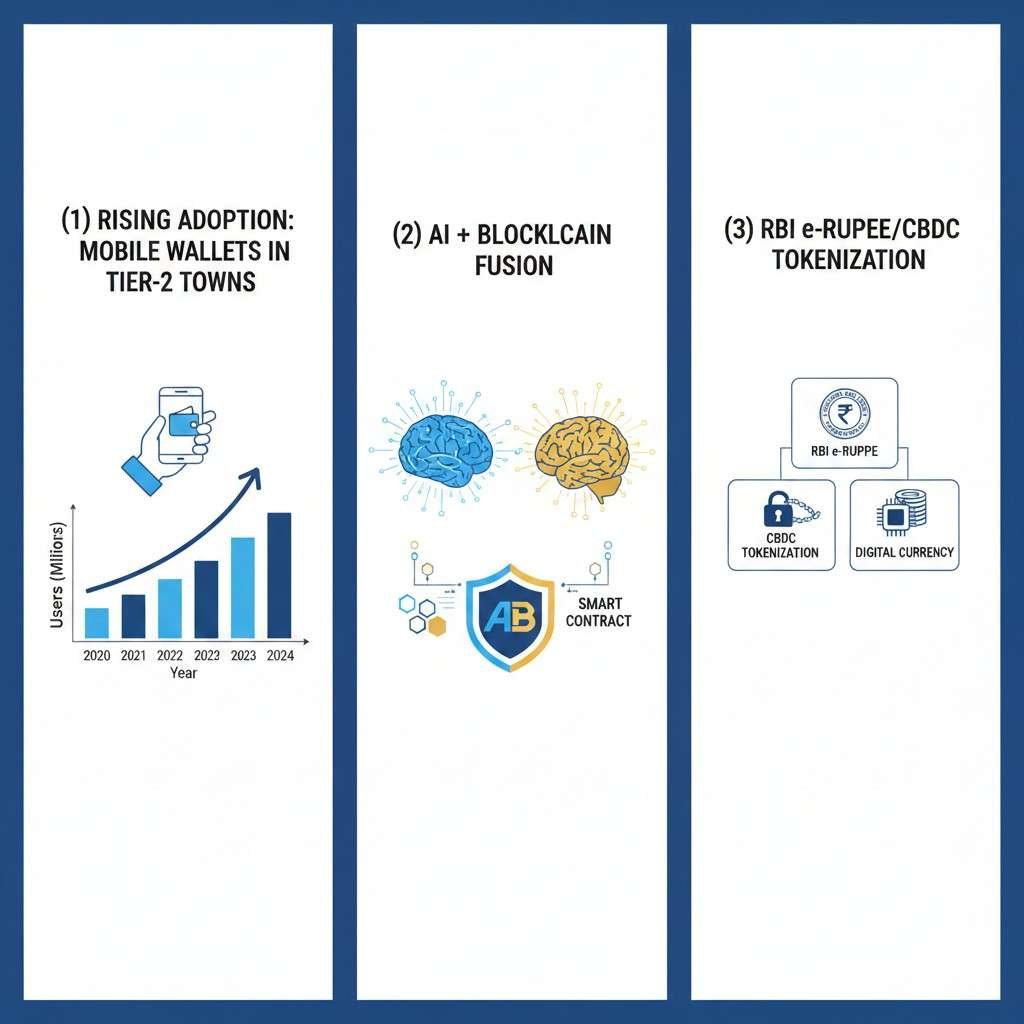
As per crypto trends in India 2026 Major Indian exchanges report millions of accounts and significant volume — and adoption is moving fast into Tier-2 and Tier-3 cities. Case in point: CoinDCX’s growth and outreach into smaller cities show retail investors are diversifying beyond metros. This broadening user base changes market dynamics — increasing liquidity but also bringing a new cohort of less experienced investors. The Times of India+1
Investor tip: Use trusted, KYC-compliant Indian exchanges and keep a mix of long-term holdings and a small, educational trading portion. Avoid overtrading — India’s 1% TDS on transactions plus taxes can eat returns.
RBI, e-Rupee (CBDC) and regulation signals
The Reserve Bank of India continues to be cautious about unbacked private crypto but actively pilots the e-Rupee (CBDC). RBI pilots include retail and wholesale trials and experiments with tokenisation of financial instruments — a sign India wants a regulated digital money system and plans to use blockchain tech for official financial plumbing. Regulators are also focused on anti-money-laundering and taxation of Virtual Digital Assets (VDAs). Reserve Bank of India+2Reuters+2
What investors should watch: any rules around stablecoins, taxation updates, and official guidelines for exchanges. Policy changes can move markets fast.
AI meets crypto: practical examples
AI is not just hype — it is showing up in the crypto stack:
- AI for risk and fraud detection: Platforms use machine learning to flag suspicious transactions and protect users.
- Smart contract audits with ML: Automated tools can find vulnerabilities faster.
- AI-assisted portfolio tools: Predictive analytics and alerting for retail investors (not investment advice, just signals).
For Indian users, crypto trends in India 2026 AI tools will be helpful in managing complexity: language support, fraud alerts, and simple recommendations tailored to tax rules and local exchanges.
Real example: Startups are combining AI models with on-chain data to provide localized risk scores for tokens and projects — useful for beginners who want a second opinion before investing. The Economic Times
Charts: adoption, funding, and regulation signals (what to watch)
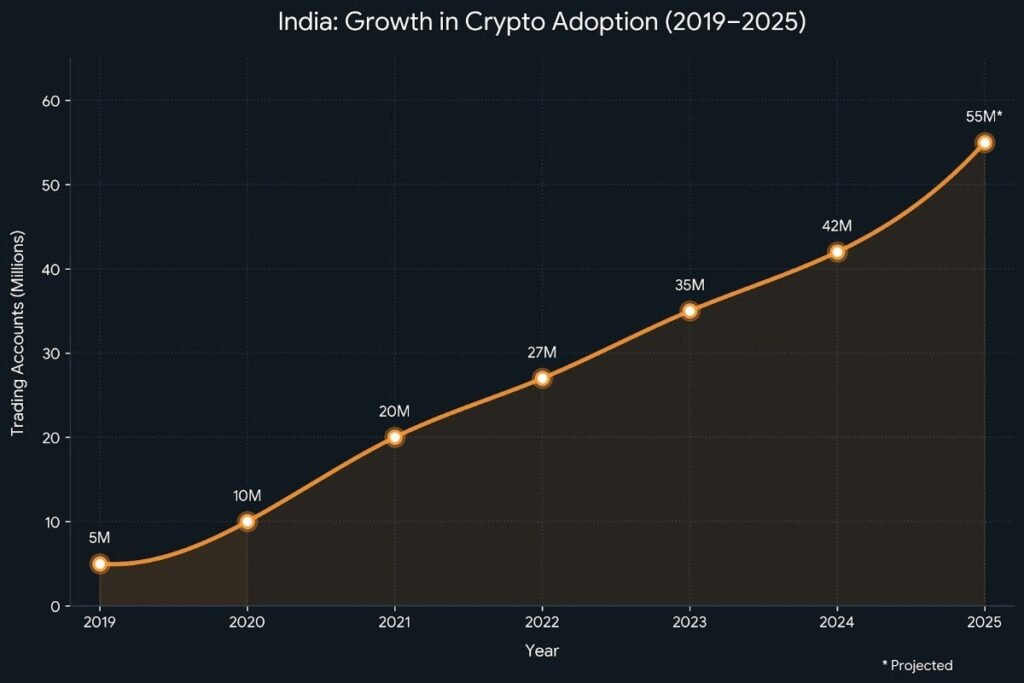
- Chart A — India: Growth in crypto adoption (2019–2025)
Plot: number of trading accounts (millions) vs year. Data points: 2019 (small), 2023 (≈35M accounts), 2025 (higher per Chainalysis). Source: Chainalysis/KPMG. Chainalysis+1
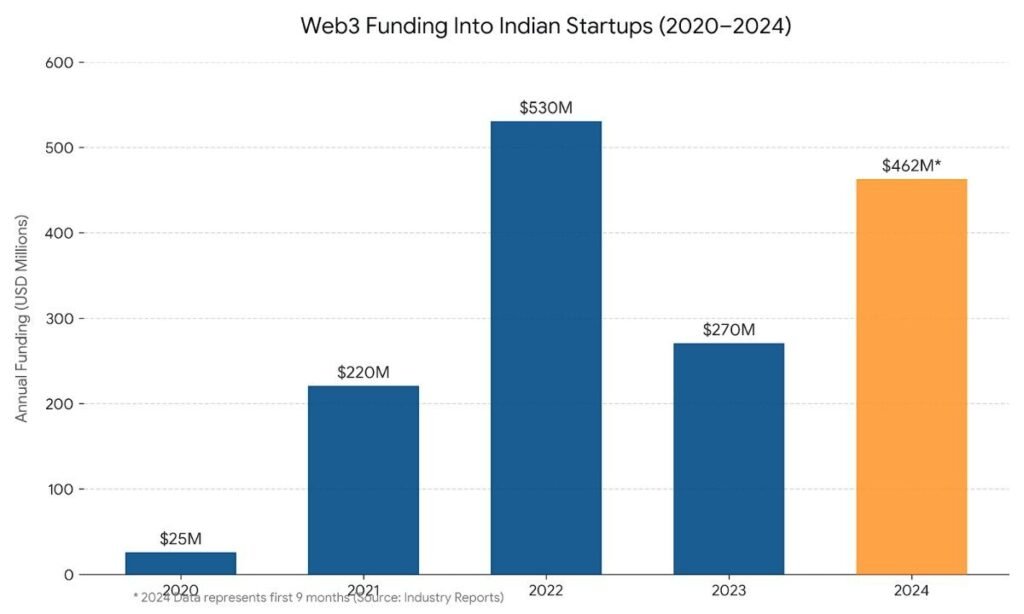
2. Chart B — Web3 funding into Indian startups (2020–2024)
Bar chart showing rising annual funding (example: $462M in first 9 months of 2024). Source: Economic Times. The Economic Times
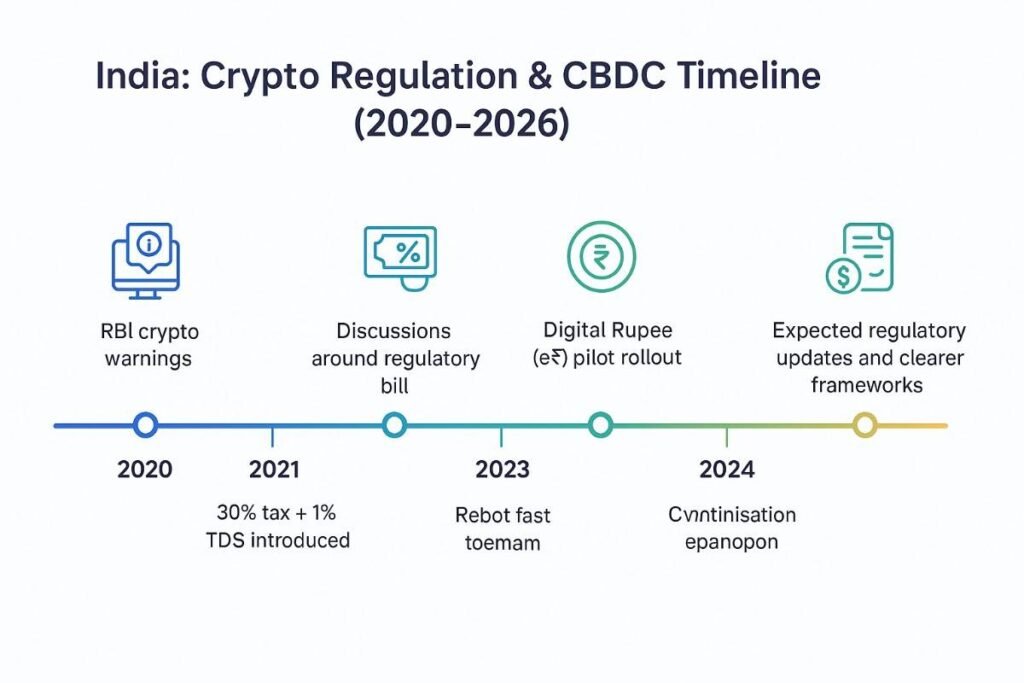
3. Chart C — Regulation & CBDC timeline (2020–2026 projected)
Timeline: RBI warnings → e-Rupee pilot → tokenisation pilots → expected regulatory clarifications.
Top risks for 2026 and how to prepare
Crypto’s promise comes with clear risks — volatility, regulatory changes, tax burdens, and scams. Here’s a practical checklist:
- Tax & TDS: Factor India’s VDA tax rules into your returns. Frequent trading attracts TDS. Keep records.
- Regulatory shock: Have an exit plan — don’t allocate more than you can afford to lose.
- Security: Use hardware wallets for long-term holdings; enable 2FA; prefer exchanges with strong compliance and insurance where possible.
- Scams & rug pulls: Learn to read whitepapers, check audits, verify team reputations, and avoid projects promising guaranteed returns.
Predictions: what investors should plan for
Below are realistic predictions for 2026 — written plainly so beginners can decide what to act on:
- Gradual regulatory clarity: Expect clearer rules on labs like token classification, AML, and exchange licensing — not overnight, but moving in a positive direction. Reserve Bank of India+1
- More Web3 products used in daily life: Tokenized assets, identity tools, and play-to-earn games with on-ramps via Indian exchanges. KPMG
- RBI CBDC integration with tokenisation pilots: CBDC + tokenized certificates of deposit could change institutional flows. This could increase institutional interest and more regulated on-chain activity. Reuters
- AI tools become mainstream on exchanges: Expect AI recommendations, automated tax helpers, and risk alerts tailored for Indian users.
Actionable plan for investors: learn the basics, use small test amounts, diversify across assets and products (spot, staking, tokenized assets), and keep a long-term portion that you don’t touch for at least 2–3 years.
FAQs (short answers, beginner friendly)
Q1. Are cryptocurrencies legal in India?
Yes — you can buy, sell and hold crypto, but they are taxed and regulated as Virtual Digital Assets. Keep updated with RBI and government announcements. Grip Invest
Q2. Will the e-Rupee replace private crypto?
No. CBDCs are different — they are sovereign digital money. But the e-Rupee may compete with stablecoins for payments and enable tokenization pilots in wholesale markets. Reserve Bank of India+1
Q3. What should a beginner do in 2026?
Start small, use trusted exchanges, learn about wallets, and avoid projects you don’t understand.
Q4. How will taxes affect trading?
India’s tax rules and TDS on transactions make frequent trading costlier — plan taxes before trading and keep statements for filings.
Conclusion
India’s crypto journey in 2026 will be defined by growing Web3 activity, stronger developer ecosystems, clearer regulatory steps, and practical AI tools that reduce entry-barriers. For investors, that means opportunity — but also the need for caution, education, and sensible risk management.
The crypto trends in India 2026 point to a maturing market: more real products, more users from beyond big metros, and more interaction between the RBI’s digital initiatives and private crypto innovation. Learn, diversify, secure your assets, and stay updated — that is the simplest blueprint for navigating what promises to be an eventful year.
Note on sources & credibility: Key facts in this article are based on recent industry reports and news: Web3 IndiaChainalysis 2025 Global Adoption Index (India leading adoption), KPMG/Hashed reports on India’s Web3 startups, RBI e-Rupee (CBDC) updates and tokenisation pilots, CoinDCX industry reports about Tier-2 adoption, and Reuters/Economic Times coverage on RBI and tokenisation pilots.